
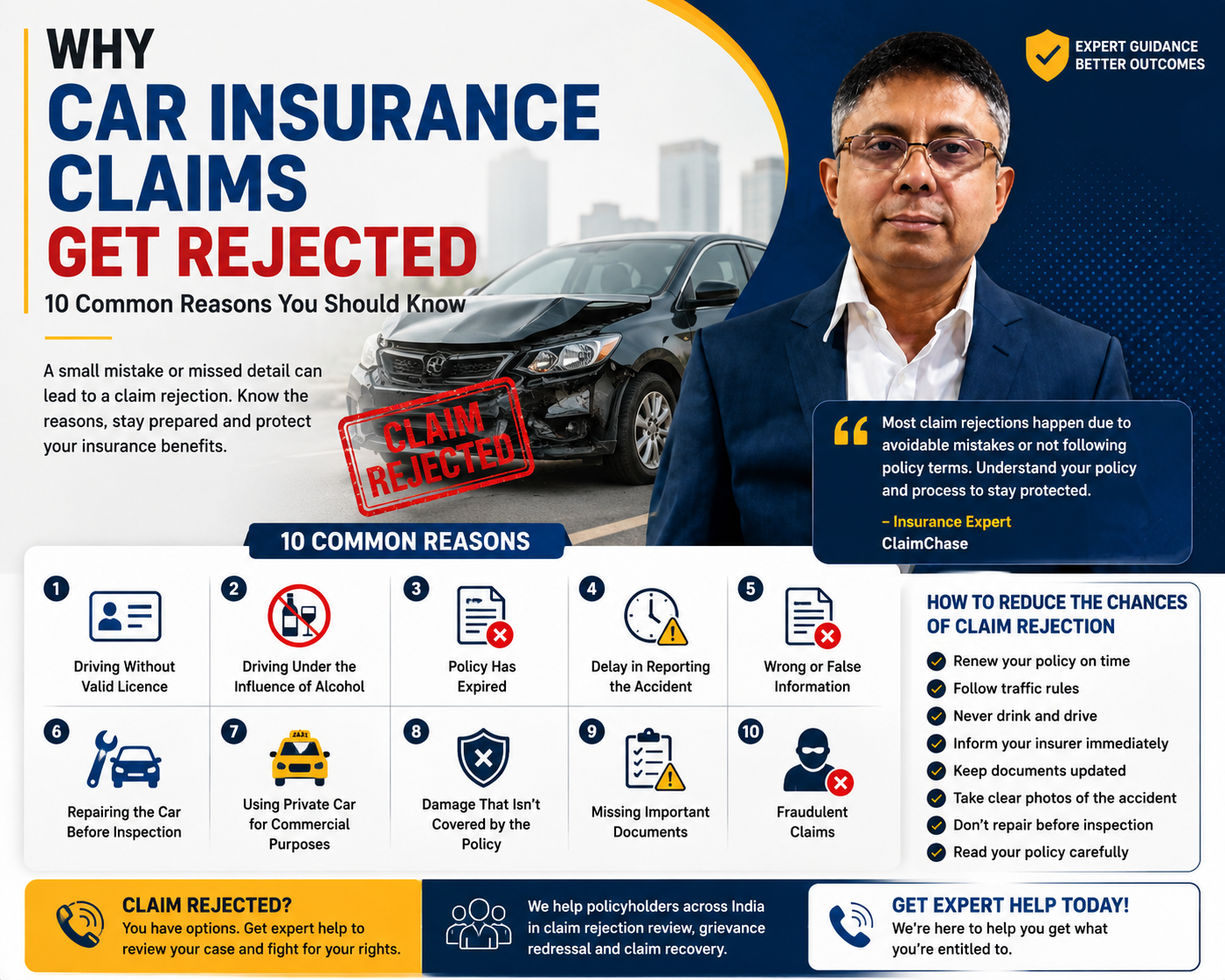
Buying car insurance gives you peace of mind. You expect your insurance company to support you when your car is damaged in an accident or suffers a loss. But many people are surprised to learn that not every claim is approved.
A car insurance claim can be rejected for several reasons. Sometimes it’s because important documents are missing, while other times it’s due to not following the terms of the policy.
The good news is that most claim rejections can be avoided if you understand how the claim process works.
In this article, we’ll explain the most common reasons why car insurance claims get rejected and share simple tips to help you avoid these mistakes.
1. Driving Without a Valid Licence
One of the biggest reasons for claim rejection is driving without a valid driving licence.
If the person driving the car doesn’t have a valid licence or is driving a type of vehicle they are not authorised to drive, the insurance company may refuse the claim.
Tip: Always carry a valid driving licence and renew it before it expires.
2. Driving Under the Influence of Alcohol
Driving after consuming alcohol or drugs is illegal and extremely dangerous. If an accident happens and the driver is found to be intoxicated, the insurance company is likely to reject the claim.
Besides losing your insurance benefits, you may also face legal action.
Remember: Safe driving protects both your life and your insurance coverage.
3. Your Insurance Policy Has Expired
Insurance only works when your policy is active.
If your policy has expired and you haven’t renewed it before the accident, your insurer is not responsible for paying the claim.
Many people realise this only after an accident, when it’s too late.
Tip: Set a reminder to renew your policy before the expiry date.
4. Delay in Reporting the Accident
After an accident, informing your insurance company quickly is very important.
A long delay without a valid reason can create doubts about the incident. It may also make it difficult for the insurer to investigate what happened.
If possible, report the accident immediately and follow the claim instructions provided by your insurer.
5. Wrong or False Information
Honesty matters when filing an insurance claim.
If the insurance company finds incorrect information, fake documents, or exaggerated damage, it can reject the claim.
Even small mistakes can delay the process.
Always provide accurate details and genuine supporting documents.
6. Repairing the Car Before Inspection
Many people rush to get their car repaired after an accident. While this is understandable, repairing the vehicle before the insurance surveyor inspects it can create problems.
The surveyor needs to assess the damage before repairs begin.
Unless it’s an emergency, wait for the insurer’s approval before starting repairs.
7. Using a Private Car for Commercial Purposes
A private car insurance policy is meant for personal use.
If you’re using the vehicle as a taxi, for deliveries, or any other commercial purpose without the correct insurance policy, your claim may be rejected.
Always make sure your policy matches how you actually use your vehicle.
8. Damage That Isn’t Covered by the Policy
Every insurance policy has certain exclusions. This means some types of damage are not covered.
For example, normal wear and tear, mechanical breakdowns, or damage caused by negligence may not be included in your policy.
Reading your policy carefully helps you understand what is and isn’t covered.
9. Missing Important Documents
Insurance companies require certain documents to process your claim.
These may include:
Driving licence
Vehicle Registration Certificate (RC)
Insurance policy copy
Repair estimate
Photos of the damage
FIR, if required
Missing documents can delay your claim or even lead to rejection.
Keeping your documents organised can save you time and stress.
10. Fraudulent Claims
Insurance fraud is taken very seriously.
If someone intentionally provides fake bills, stages an accident, or exaggerates the damage, the insurer can reject the claim immediately.
In serious cases, legal action may also be taken.
Always submit genuine claims with honest information.
How to Reduce the Chances of Claim Rejection
You can’t always prevent an accident, but you can avoid many of the mistakes that lead to claim rejection.
Here are a few simple habits that can help:
Renew your insurance policy on time.
Follow traffic rules.
Never drink and drive.
Inform your insurer immediately after an accident.
Keep all important documents updated.
Take clear photos of the accident scene.
Don’t repair your vehicle until the insurer allows it.
Read your insurance policy before you need to use it.
These small steps can make the claim process much smoother.
What Should You Do If Your Claim Is Rejected?
Receiving a rejection letter can be disappointing, but it doesn’t always mean the matter is over.
Start by reading the rejection letter carefully to understand the reason.
If you believe the decision is unfair, you can contact your insurance company for clarification and submit any additional documents that support your case. If the issue remains unresolved, you may use the insurer’s grievance process or explore other dispute resolution options available under Indian insurance regulations.
Taking the right steps calmly and with proper documentation often gives you a better chance of resolving the issue.
Final Thoughts
A car insurance claim is more than just paperwork—it’s financial support during a difficult time. Understanding why claims get rejected can help you avoid common mistakes and improve your chances of a smooth claim settlement.
The best approach is to stay informed, follow your policy conditions, and keep all your documents ready. A little preparation today can save you a lot of stress tomorrow.
If your claim has been rejected and you’re unsure about the next step, don’t lose hope. Understanding the reason behind the rejection is the first step towards finding the right solution.
Frequently Asked Questions (FAQs)
1. Can a car insurance claim be rejected after inspection?
Yes. Even after the vehicle inspection, a claim may be rejected if the insurer finds that the policy terms were not followed or required documents are missing.
2. Does late reporting always lead to claim rejection?
Not always. If you have a genuine reason for the delay and inform your insurer as soon as possible, your claim may still be considered.
3. Is engine damage covered by car insurance?
It depends on your policy. Standard policies may not cover all types of engine damage, so always check your policy wording.
4. How long does a car insurance claim usually take?
The timeline varies depending on the insurer, the complexity of the claim, and whether all required documents are submitted on time.