
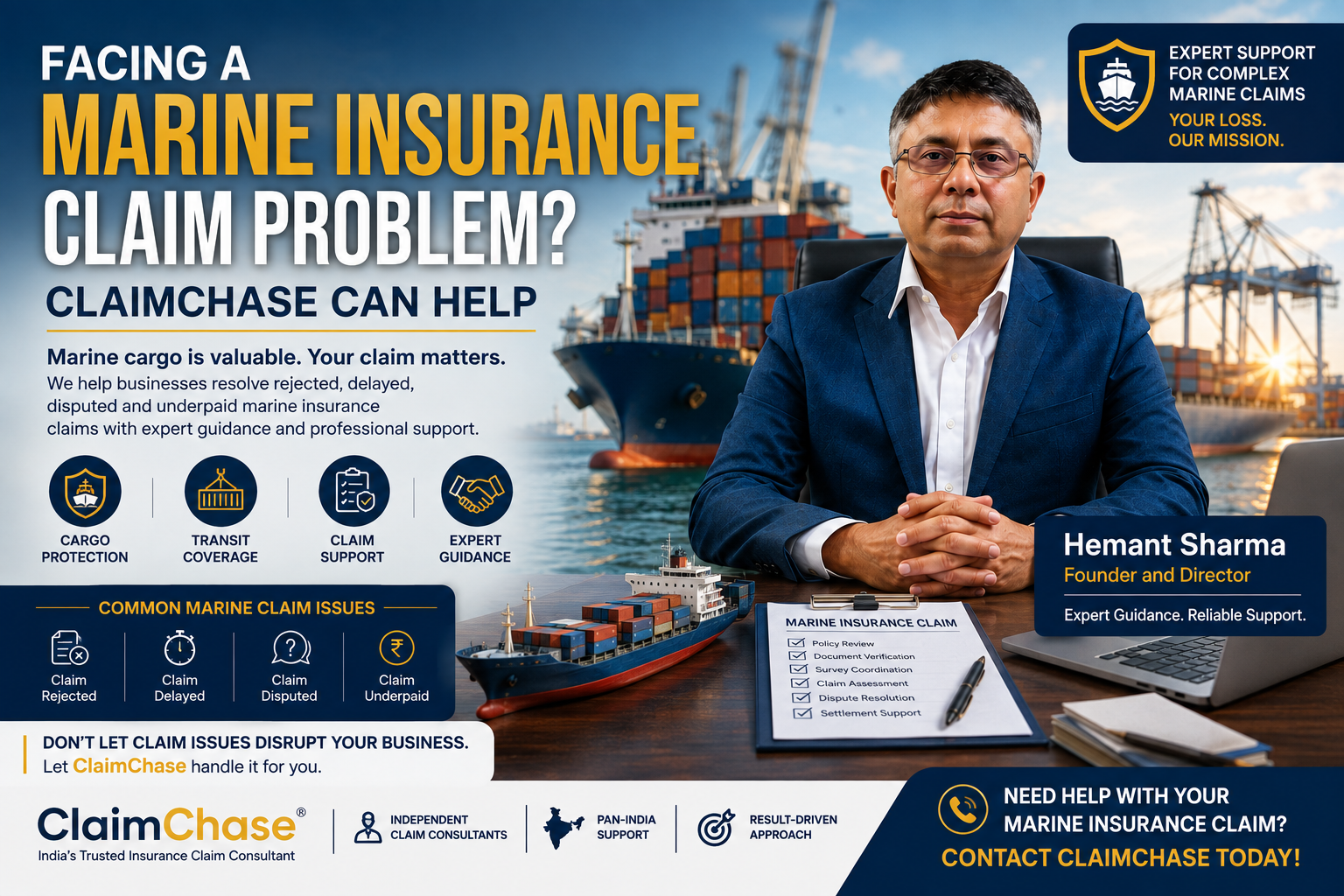
Marine cargo plays a crucial role in global trade.
Every day, numerous shipments move via sea, road, rail, and air, carrying various items such as raw materials, machinery, electronics, and consumer products. Marine insurance is designed to shield businesses from financial losses that may occur during transportation. However, submitting a Marine Insurance Claim can be a complex and challenging process.
Issues like cargo damage, theft, water ingress, mishandled containers, late reporting, or incomplete documentation can turn a valid claim into a drawn-out dispute.
Many businesses realize the difficulty of the claim process only after experiencing a loss.
If you are facing a Marine Insurance Claim problem, ClaimChase offers independent claim consulting services to assist businesses in handling rejected, delayed, disputed, or underpaid insurance claims with confidence.
Why Marine Insurance Claims Become Challenging
A marine insurance policy aims to protect cargo while in transit.
However, each policy comes with specific conditions, exclusions, documentation requirements, and reporting timelines that need careful attention.
Even when goods are genuinely damaged, a claim can become complicated if the necessary evidence is not collected or the claim is not properly presented.
A Real-Life Scenario:
An importer receives a shipment of industrial equipment at Mumbai Port.
During unloading, several machines are found damaged due to improper container handling and moisture exposure during transit.Although the business has marine insurance, the claim is delayed because the damage was not immediately documented and the required survey and shipping records were incomplete.
This financial loss affects project timelines, customer commitments, and business cash flow.
Such situations highlight the importance of professional guidance during a Marine Insurance Claim.
Common Marine Insurance Claim Problems:
Businesses often encounter similar challenges during the claim process.
Claim Rejection
Claims may be rejected due to policy exclusions, insufficient evidence, delayed notification, or failure to comply with policy conditions.
Delayed Claim Settlement
Missing documents, extended survey processes, or communication gaps between multiple parties can cause significant delays in claim settlements.
Partial Claim Settlement
Sometimes insurers approve only part of the claimed amount based on depreciation, policy limits, deductibles, or survey findings.
Documentation Issues
Marine claims usually require detailed documentation, including invoices, packing lists, bills of lading, survey reports, photographs, and delivery records.
Missing or inconsistent documents often create unnecessary complications.
Common Reasons Marine Insurance Claims Are Rejected.
Understanding these reasons can help businesses prepare stronger claims.
Delay in Reporting Cargo Damage.
Most marine insurance policies require prompt notification after discovering cargo damage.
Delays can weaken the claim.
Inadequate Documentation
Missing shipping documents, invoices, survey reports, or photographs make it difficult to establish the extent and cause of the loss.
Improper Cargo Inspection:
Accepting damaged cargo without recording visible damage or obtaining delivery remarks can create challenges later.
Policy Exclusions:
Not every transit-related loss is automatically covered.
Coverage depends on the specific terms, clauses, warranties, and exclusions in the marine insurance policy.
Failure to Minimize Loss
Policyholders are generally expected to take reasonable steps to prevent further damage after discovering the loss.
Expert Tips for a Successful Marine Insurance Claim
Businesses can improve their chances of a smoother claim process by following a few best practices.
Inspect Cargo Immediately
Examine shipments as soon as they arrive and document any visible damage before unloading or distribution.
Preserve Evidence
Take clear photographs and videos of damaged cargo, packaging, containers, and seals.
Keep damaged goods available for inspection whenever possible.
Maintain Complete Records
Keep copies of:
- – Insurance Policy
- – Commercial Invoice
- – Packing List
- – Bill of Lading
- – Delivery Receipt
- – Survey Report
- – Damage Photographs
- – Transport Documents
- – Correspondence with Carrier
Well-organized documentation strengthens your Marine Insurance Claim.
Notify All Relevant Parties.
Inform your insurer, transporter, shipping line, freight forwarder, or logistics provider immediately after discovering the damage.
How ClaimChase Helps
A Marine Insurance Claim often involves multiple stakeholders, technical documentation, and detailed policy interpretation.
Managing all of this while minimizing business disruption can be overwhelming.
That is where ClaimChase adds value.
As an independent insurance claim consulting company, ClaimChase represents the interests of policyholders—not insurance companies.
Our goal is to help businesses understand the claim process, organize documentation, and respond effectively when claims become complicated.
- – Policy Review: We examine your marine insurance policy to explain coverage, exclusions, warranties, and applicable claim conditions..
- – Documentation Review. Our experts identify missing documents, inconsistencies, and opportunities to strengthen your claim before submission.
- – Claim Assessment: If your Marine Insurance Claim has been delayed, disputed, rejected, or underpaid, we help you understand the reasons behind the insurer’s decision.
- – Professional Claim Guidance From the initial notification to final correspondence, ClaimChase provides practical guidance throughout the claim journey.
- – Support for Complex Cargo Claims. Whether your cargo was damaged during sea transit, inland transportation, loading, unloading, warehousing, or multimodal transport, our experienced consultants help you navigate complex claim situations more confidently.
Common Mistakes to Avoid:
Many businesses unintentionally weaken their own Marine Insurance Claim by making avoidable mistakes.
Avoid these common errors:
- – Delaying notification to the insurer.
- – Failing to arrange a cargo survey promptly.
- – Disposing of damaged goods before inspection.
- – Not photographing damaged cargo.
- – Missing important shipping documents.
- – Ignoring policy conditions.
- – Accepting a reduced settlement without understanding the assessment.
Preventing these mistakes can save valuable time and reduce unnecessary disputes.
Why Businesses Choose ClaimChase
Marine insurance claims involve more than just submitting paperwork.
They require careful documentation, policy interpretation, and a structured approach to claim presentation.
Businesses across India trust ClaimChase because we provide:
- – Independent insurance claim consulting
- – Expert policy review
- – Documentation guidance
- – Assistance with rejected, delayed, disputed, and underpaid claims
- – Professional support throughout the claim process
- – Practical solutions tailored to complex cargo losses.
Our focus is to help businesses navigate insurance claim challenges with clarity and confidence.
Final Thoughts:
A Marine Insurance Claim is more than a financial recovery process—it’s an important step in protecting your business from the impact of unexpected cargo losses.
While marine insurance offers valuable protection, the success of a claim often depends on timely reporting, proper documentation, and a clear understanding of policy terms.
If your Marine Insurance Claim has become complicated, seeking professional guidance early can help you better understand your options and avoid common mistakes.
Whether you’re dealing with cargo damage, container losses, theft, water damage, delayed deliveries, or a rejected, delayed, disputed, or underpaid Marine Insurance Claim, ClaimChase is here to support you.
Our experienced insurance claim consultants help businesses across India review policies, organize documentation, understand insurer queries, and navigate complex marine insurance claim procedures with confidence.