
Did you know that your insurance policy could have money waiting to be claimed? Many policyholders and family members are unaware that insurance benefits can remain unclaimed for years because of outdated contact details, missing documents, forgotten policies, or incomplete claim processes.
A recent Economic Times report highlighted the issue of unclaimed insurance money in India, bringing attention to the importance of checking whether you or your family members have any insurance benefits that are still unpaid.
The good news is that unclaimed does not necessarily mean lost. Policyholders or eligible beneficiaries can take steps to identify and claim amounts lying with insurers.
In this guide, we explain why insurance money becomes unclaimed, how to check for it, what documents may be required, and what steps you can take if you discover an unclaimed amount.
What Is Unclaimed Insurance Money?
Unclaimed insurance money refers to an amount that is payable by an insurance company but has not yet been collected or received by the policyholder, nominee, beneficiary, or other eligible person.
Depending on the policy and circumstances, the amount may relate to benefits such as:
- Policy maturity proceeds
- Death benefits
- Survival benefits
- Annuity or pension payments
- Refunds or other payable amounts
- Eligible claim proceeds
- Other amounts payable under an insurance policy
The important point is that an amount being classified as unclaimed does not automatically mean that the policyholder has lost the money. The actual eligibility and payment depend on the policy terms, applicable requirements, and verification by the insurer.
Why Does Insurance Money Become Unclaimed?
There are several reasons why insurance benefits may remain unpaid.
1. The Family Is Unaware of the Policy
Sometimes a person may purchase a life or other insurance policy without clearly informing family members about it.
After the policyholder’s death, the nominee or family may not know that a policy exists.
2. Contact Details Are Outdated
People frequently change their:
- Mobile number
- Email address
- Residential address
- Bank account
If these details are not updated with the insurer, communication regarding policy benefits may not reach the policyholder.
3. Policy Documents Are Lost
Old insurance policies may be stored in physical files and eventually misplaced.
If the family cannot locate the policy document, they may not even realize that a benefit is available.
4. Nominee Information May Be Outdated
Changes in family circumstances can make nominee information outdated. Keeping nominee details updated can help reduce complications when a claim becomes payable.
5. Maturity Benefits Are Overlooked
A policyholder may forget about an old policy or miss communication regarding maturity benefits.
This can result in money remaining unpaid with the insurer.
6. Claim Documentation Is Incomplete
A claim may not move forward if the required documents, KYC information, bank details, or other supporting records are incomplete.
In such cases, the payable amount may remain unresolved until the necessary requirements are completed.
How Can You Check Whether You Have Unclaimed Insurance Money?
One of the most useful official resources is Bima Bharosa, the grievance-management platform of the Insurance Regulatory and Development Authority of India (IRDAI).
IRDAI currently provides an Unclaimed Amount Query facility through Bima Bharosa. The facility allows users to submit details such as the policyholder’s name, mobile number, date of birth, PAN where applicable, contact details, insurer and policy number to search for unclaimed amounts.
Check Unclaimed Insurance Amount through IRDAI Bima Bharosa
The portal also provides links to participating insurers’ unclaimed-amount portals.
Step-by-Step: How to Trace Unclaimed Insurance Money
Step 1: Collect Your Insurance Information
Before starting your search, gather whatever information you have, such as:
- Policyholder’s full name
- Policy number
- Date of birth
- PAN
- Registered mobile number
- Email address
- Previous address
- Insurer’s name
- Premium receipts
- Bank statements
- Old policy documents
You may not have all these details, but having more information can make identification easier.
Step 2: Identify the Insurance Company
Try to determine which insurer issued the policy.
Look through:
- Old policy papers
- Bank statements
- Email inbox
- SMS records
- Premium payment receipts
- Income-tax/financial records
- Family documents
If you know the policy number, it can be particularly useful when contacting the insurer.
Step 3: Use the Official Unclaimed Amount Facility
IRDAI’s Bima Bharosa portal provides an unclaimed-amount query facility.
You can provide the required policyholder and insurer information and submit the query. The official form includes fields for policyholder details, contact information, insurance company and policy number.
Do not rely on random websites or individuals claiming that they can release your insurance money immediately.
What If You Find an Unclaimed Amount?
Finding an amount associated with your policy is only the beginning.
The insurer may require verification before releasing the money. Depending on the circumstances, you may need documents such as:
- Identity proof
- Address proof
- PAN
- Bank account details
- Policy documents
- Nominee/beneficiary documents
- Death certificate, where applicable
- Relationship or succession-related documents, where applicable
- Other documents requested by the insurer
The exact documents can vary depending on the policy, type of benefit and claimant’s circumstances.
Therefore, it is important to communicate with the concerned insurer and follow its official process.
What If the Policyholder Has Passed Away?
This situation requires additional care.
If you believe a deceased family member had an insurance policy, start by checking their:
- Personal files
- Bank records
- Email account
- Phone messages
- Premium payment records
- Financial documents
- Tax records
- Employer records, where relevant
If you identify an insurer, contact the company and ask about the policy and claim process.
The insurer may require proof of death, identity, nominee/beneficiary information and other supporting documents before determining eligibility.
What If the Insurance Company Does Not Resolve Your Issue?
If you have a dispute with an insurer, the first step is generally to raise the matter with the insurer’s grievance-redressal mechanism and keep written records of your complaint and supporting documents.
IRDAI’s Bima Bharosa platform allows policyholders to register and track insurance grievances. IRDAI states that complaints can be submitted through the portal and that a token number is generated for tracking.
If the issue remains unresolved or the response is unsatisfactory, further grievance-redressal channels may be available, including escalation through Bima Bharosa and, where applicable, the Insurance Ombudsman process.
Be Careful of Insurance Recovery Scams
This is particularly important when dealing with unclaimed money.
Fraudsters may contact people claiming:
“Your insurance money is waiting.”
They may then ask for:
- Processing fees
- Registration fees
- Advance payments
- Bank transfers
- OTPs
- Card details
- UPI payments
- QR-code scans
Be extremely cautious.
IRDAI’s Bima Bharosa portal specifically warns that it does not ask complainants or policyholders for payments and advises users not to scan QR codes or use links claiming to facilitate disbursement.
Never share your OTP, PIN, password or banking credentials with an unknown person claiming to help recover insurance money.
How to Prevent Your Insurance Money From Becoming Unclaimed
Prevention is easier than trying to trace an old policy years later.
Keep Your Contact Details Updated
Inform your insurer whenever your:
- Mobile number changes
- Email changes
- Address changes
- Bank account changes
Keep Policy Documents Safely
Maintain digital and physical copies of important insurance documents.
Inform Your Family
Your immediate family should know:
- Which insurance policies you hold
- The insurer’s name
- Policy numbers
- Nominee details
- Where the documents are stored
Review Your Policies Periodically
Set a reminder to review your insurance policies at least once a year.
Check whether your:
- Nominee details are correct
- Contact information is current
- Bank details are updated
- Policy documents are available
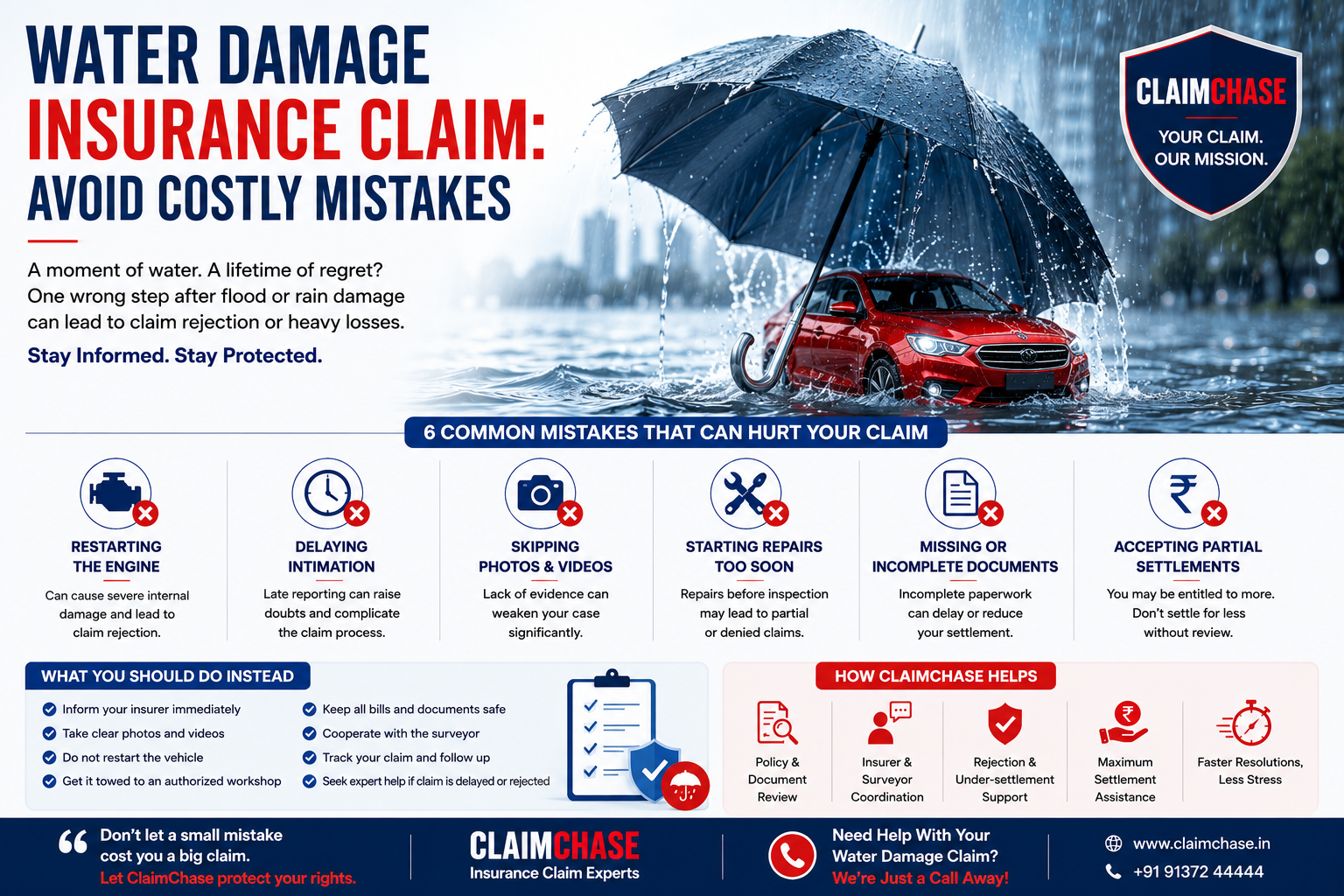
What Should You Do If Your Insurance Claim Is Rejected or Delayed?
Unclaimed insurance money and a rejected or delayed insurance claim are not exactly the same situation.
If your claim has already been submitted but has been:
- Rejected
- Delayed
- Underpaid
- Partially settled
- Disputed
you should first understand why the insurer has taken that decision.
Review the:
- Policy wording
- Claim form
- Supporting documents
- Insurer’s rejection/settlement letter
- Survey or assessment report, where applicable
- Correspondence with the insurer
A professional review can help you understand what documentation or policy-related issue may be affecting the claim and what options may be available.
How ClaimChase Can Help
At ClaimChase, we provide professional insurance claim assistance for policyholders dealing with complex claim situations.
Our support can include reviewing relevant policy and claim documents, understanding insurer communications, identifying documentation-related concerns and guiding policyholders through the appropriate claim-resolution process.
We assist with different types of insurance claims, including:
- Health Insurance Claims
- Motor Insurance Claims
- Fire Insurance Claims
- Property Insurance Claims
- Business Insurance Claims
- Travel Insurance Claims
- Marine Insurance Claims
- Life Insurance Claims
If your insurance claim has been rejected, delayed, underpaid or disputed, professional guidance can help you understand the situation before deciding on your next step.
Frequently Asked Questions
1. What is unclaimed insurance money?
It is an amount payable under an insurance policy that remains unpaid or uncollected by the policyholder, nominee, beneficiary or other eligible person.
2. How can I check for unclaimed insurance money?
You can use the official IRDAI Bima Bharosa Unclaimed Amount Query facility and also check the relevant insurer’s official unclaimed-amount portal.
3. Can a family member claim insurance money after the policyholder’s death?
Potentially, if the person is eligible under the policy and applicable requirements. The insurer will verify the claimant and supporting documents before processing the payment.
4. What if I don’t have my policy number?
You can still try to identify the insurer using old financial records, premium receipts, emails, bank statements and other available information. The exact process will depend on the insurer and circumstances.
5. Is Bima Bharosa an official government platform?
Bima Bharosa is the grievance-management platform established by IRDAI, India’s insurance regulator, for policyholder grievance management.
6. Can someone ask me for money to recover my unclaimed insurance amount?
Be very careful. IRDAI’s Bima Bharosa portal warns that it does not ask policyholders or complainants for payments and specifically cautions against QR codes or links claiming to facilitate disbursement.
7. What should I do if my insurance claim has been rejected?
Start by obtaining the insurer’s written decision and reviewing the policy terms, claim documents and reasons given for rejection. Depending on the circumstances, you can raise the matter through the insurer’s grievance mechanism and appropriate escalation channels.
Final Takeaway
Your insurance money should not remain forgotten simply because a policy is old or documents are difficult to locate.
If you or your family have held insurance policies in the past, take some time to check your records, verify nominee and contact details, and search for any potential unclaimed amounts through official channels.
And if you already have an insurance claim that has been rejected, delayed, underpaid or disputed, don’t ignore it. Understand the reason, review your documentation and take informed action.
ClaimChase is here to help policyholders navigate complex insurance claim situations with professional guidance and greater clarity.
Need help with an insurance claim? Contact ClaimChase today.