When you purchase an insurance policy, the insurance company does not simply accept the application and provide coverage. Before issuing a policy, the insurer evaluates the level of risk involved, the information provided by the applicant, and the terms under which coverage can be offered. This process is known as insurance underwriting.
For policyholders, understanding underwriting is important because underwriting decisions can influence your premium, policy coverage, exclusions, conditions, and sometimes the outcome of a future insurance claim.
In this guide, we explain what insurance underwriting means, how the process works, what insurers evaluate, and what policyholders should know before purchasing a policy.
What Is Insurance Underwriting?
Insurance underwriting is the process used by an insurance company to assess the risk associated with providing insurance coverage.
An insurer collects information about the person, property, vehicle, business, health condition, shipment, or other insured subject and evaluates the possibility and potential cost of future losses.
Based on this assessment, the insurer may:
- Accept the insurance application
- Accept it with specific conditions
- Charge a higher premium
- Apply certain exclusions or limitations
- Request additional information or medical examinations
- Decline the application in certain circumstances
The objective of underwriting is to help the insurer determine whether the proposed risk can be covered and under what terms.
Why Is Insurance Underwriting Important?
Underwriting helps insurance companies make informed decisions before taking on a risk. At the same time, it is important for policyholders because the information provided during underwriting becomes part of the policy’s risk assessment.
For example, in health insurance, an insurer may consider medical history and other relevant information. For motor insurance, factors relating to the vehicle and its use may be considered. For commercial insurance, the insurer may evaluate the nature of the business, property, assets, location, previous losses, and other relevant risk factors.
A clear understanding of underwriting can help policyholders avoid misunderstandings about their coverage later.
How Does the Insurance Underwriting Process Work?
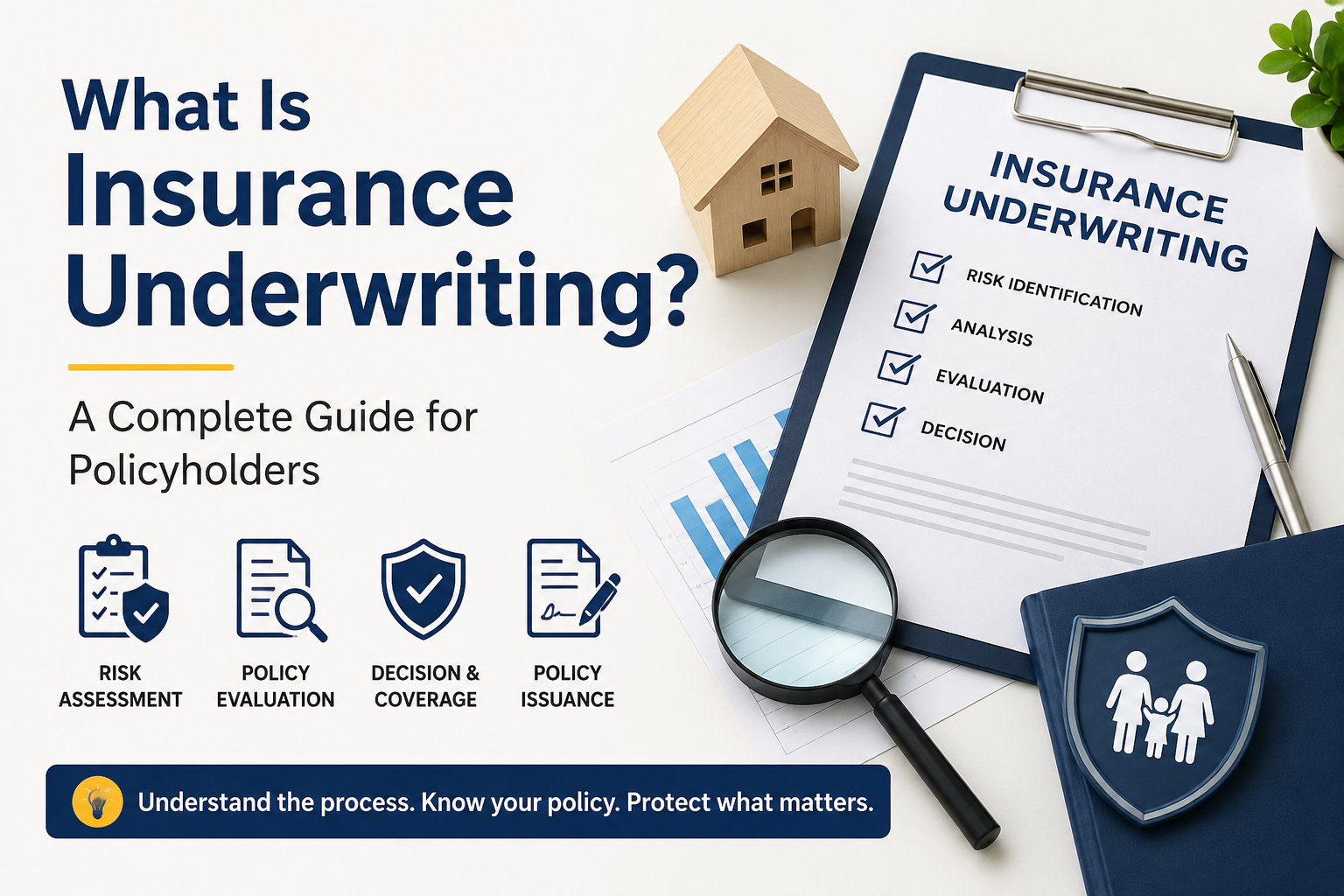
Although the exact process differs between insurance companies and policy types, underwriting generally involves several stages.
1. Submission of the Proposal
The policyholder provides information through an insurance proposal or application form. The information may include personal details, financial information, medical history, property details, vehicle information, business operations, or other details relevant to the particular policy.
2. Risk Assessment
The insurer evaluates the information provided to understand the level and nature of the risk.
Depending on the policy, the insurer may review:
- Previous insurance claims
- Property or vehicle details
- Medical information
- Business activities
- Previous loss history
- Financial information
- Risk management measures
- Location and exposure to specific risks
3. Verification and Additional Information
In some cases, the insurer may require additional documents, inspections, reports, medical tests, photographs, valuations, or other information before making a final underwriting decision.
4. Underwriting Decision
After reviewing the available information, the insurer decides whether to provide coverage and determines the applicable terms.
The final policy may include specific conditions, exclusions, deductibles, limits, or premium adjustments.
5. Policy Issuance
Once the underwriting process is completed and the policy is accepted, the insurer issues the policy documents containing the agreed terms and conditions.
What Factors Can Affect Underwriting?
The factors considered depend heavily on the type of insurance.
Health Insurance
Underwriting may consider information such as medical history, age, existing conditions, previous treatment, and other relevant risk factors, depending on the product and applicable rules.
Motor Insurance
The insurer may consider the vehicle type, age, usage, location, previous claims, and other relevant details.
Fire and Property Insurance
Factors can include the property’s construction, occupancy, location, fire protection systems, assets, business activities, and previous loss experience.
Marine Insurance
Underwriting may involve assessing the nature of the goods, voyage, transportation arrangements, vessel-related risks, packaging, and other relevant factors.
Business Insurance
Commercial underwriting can involve reviewing the nature of the business, premises, machinery, stock, turnover, previous claims, risk controls, and potential exposure to different types of losses.
Why Is Accurate Information Important During Underwriting?
One of the most important responsibilities of a policyholder is to provide complete and accurate information when applying for insurance.
Incorrect, incomplete, or misleading information can create problems later, particularly if the insurer believes that important information was not disclosed or was inaccurately represented.
Policyholders should therefore:
- Read proposal forms carefully.
- Provide accurate information.
- Avoid hiding relevant facts.
- Review the policy documents after issuance.
- Check exclusions and conditions.
- Keep copies of submitted documents.
- Inform the insurer about relevant changes when required under the policy.
Keeping proper records can also be useful if questions arise during a future claim.
Can Underwriting Affect an Insurance Claim?
Yes, underwriting and claims are closely connected, although they are different processes.
Underwriting takes place primarily when the insurer evaluates and accepts a risk. Claim assessment takes place when a loss is reported and the policyholder requests payment under the policy.
During a claim, the insurer may review information that was provided during the underwriting stage. If there is a significant discrepancy between the information disclosed when the policy was purchased and the circumstances surrounding the claim, questions may arise.
However, a claim decision should ultimately be assessed according to the actual policy wording, applicable conditions, exclusions, facts, and evidence relevant to the claim.
Can an Underwriting Issue Lead to Claim Problems?
Potentially, yes. For example, disputes may arise where an insurer believes that important information was not disclosed during the proposal process or that the actual risk differs materially from what was presented.
However, every case is different. A policyholder should not automatically assume that an insurer’s reference to “underwriting” means a claim is invalid.
If a claim is rejected, delayed, or reduced because of an alleged underwriting issue, it is important to carefully review:
- The original proposal form
- Policy wording
- Disclosures made at the time of purchase
- Insurer communications
- Claim documents
- Relevant supporting evidence
- The specific reason given for the claim decision
What Should You Do If Your Claim Is Rejected Due to an Underwriting Issue?
If an insurer rejects or reduces your claim and refers to underwriting concerns, don’t rely only on a verbal explanation.
Ask for the decision and reasons in writing and collect the relevant policy and claim documents. Review the exact policy clause being relied upon and compare it with the information that was actually provided when the policy was purchased.
If the issue remains unclear, policyholders can seek professional Insurance Claim Rejection Support to understand the decision and determine what options may be available under the policy and applicable grievance procedures.
Underwriting vs Claim Assessment
It is useful to understand the difference:
| Insurance Underwriting | Claim Assessment |
|---|---|
| Takes place when evaluating the risk | Takes place after a loss is reported |
| Determines whether and how risk is insured | Determines whether the reported loss is covered |
| Helps determine premium and policy terms | Helps determine the claim amount payable |
| Reviews information about the proposed risk | Reviews the incident, documents, damage, and policy coverage |
Both processes are important, but they serve different purposes.
Final Thoughts
Insurance underwriting is an important part of the insurance process. It allows insurers to evaluate risks before providing coverage and helps determine appropriate premiums, terms, conditions, and exclusions.
For policyholders, the key is to provide accurate information, understand the policy before purchasing it, keep proper documentation, and review the final policy carefully.
If an insurance claim is later rejected, delayed, or underpaid because of an alleged underwriting issue, policyholders should carefully examine the insurer’s reasoning rather than assuming that the decision is automatically final. Understanding the policy, proposal information, supporting evidence, and applicable claim procedures can help you make a more informed decision about the next step.
ClaimChase provides professional Insurance Claim Assistance, Insurance Claim Rejection Support, and Insurance Claim Settlement Assistance to help policyholders understand and navigate complex insurance claim situations.