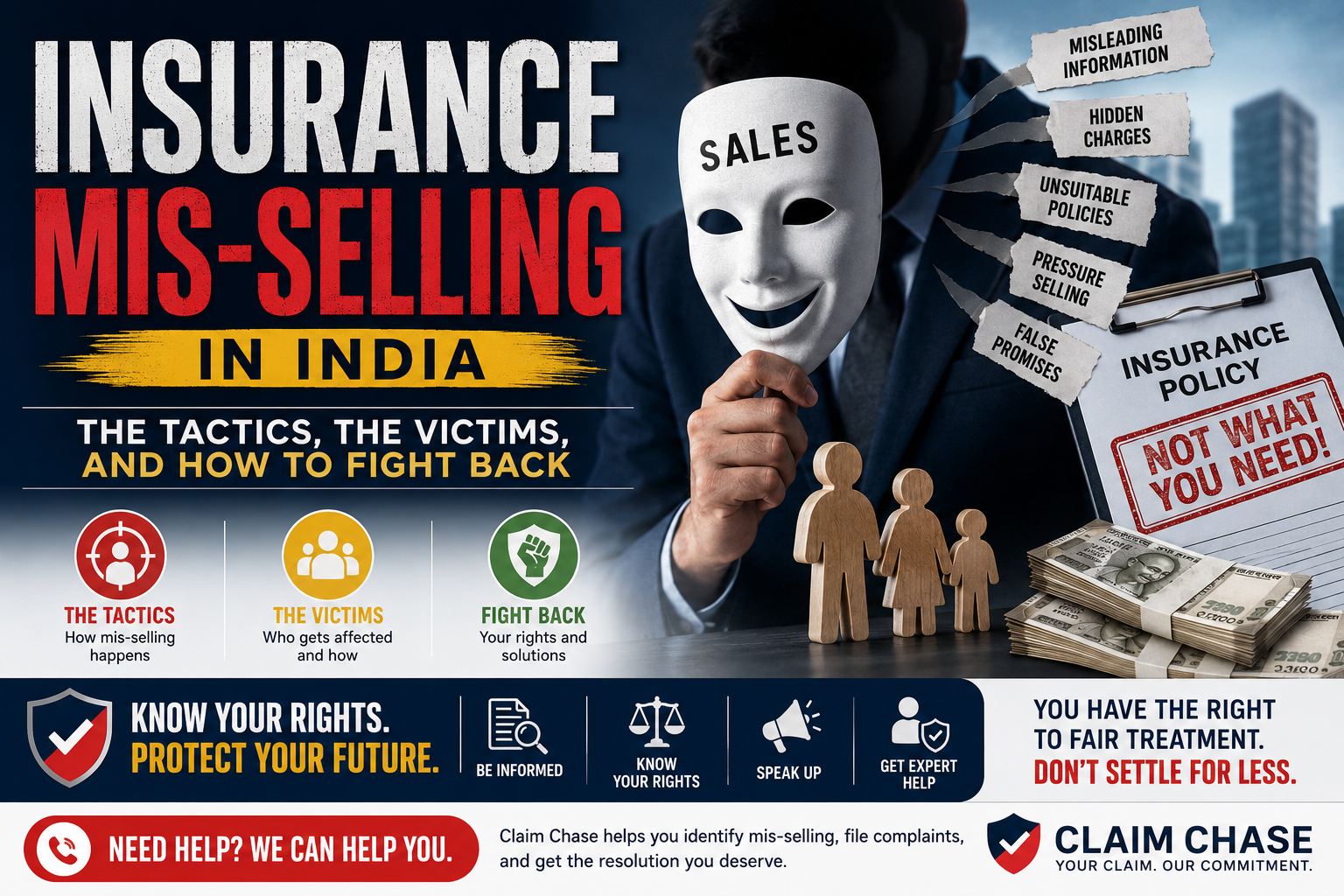

Don’t Let a Small Mistake Cost You Thousands
Imagine paying insurance premiums for years, only to hear these words when you finally need help:
“Your claim has been rejected.”
It’s frustrating, stressful, and often avoidable.
Every year, thousands of insurance claims are delayed, reduced, or rejected because of simple mistakes that policyholders don’t even realize they’re making. Whether it’s a health, motor, property, fire, marine, or business insurance claim, understanding the common reasons for rejection can significantly improve your chances of receiving a fair settlement.
At Claim Chase, we’ve worked with policyholders and businesses facing complex claim situations. We’ve seen firsthand how the right guidance, proper documentation, and expert representation can make all the difference.
In this guide, we’ll walk you through the 10 most common reasons insurance claims get rejected-and, more importantly, how you can avoid them.
Why Are Insurance Claims Rejected?
Insurance companies don’t reject claims randomly.
Every claim is evaluated based on:
- Policy terms and conditions
- Coverage limits
- Supporting documents
- Timely reporting
- Evidence of loss
- Compliance with policy requirements
Even a genuine claim can be rejected if these requirements aren’t met.
The good news?
Most claim rejections can be prevented with proper planning and expert support.
- Delayed Claim Intimation
The Mistake
One of the biggest reasons claims get rejected is notifying the insurer too late.
Whether it’s a road accident, hospital admission, fire damage, machinery breakdown, or burglary, insurance companies expect prompt notification.
Waiting days-or even weeks-can raise questions about the authenticity of the incident.
How to Avoid It
✔ Inform your insurer immediately after the incident.
✔ Keep copies of emails, claim reference numbers, and acknowledgment receipts.
✔ If you’re unsure about the process, seek professional guidance before delays become costly.
- Incomplete or Incorrect Documentation
The Mistake
Missing documents are among the most common reasons for claim delays and rejections.
Examples include:
- Missing invoices
- Hospital records
- FIR (where applicable)
- Repair estimates
- Photographs
- Identity documents
- Purchase bills
- Survey reports
Even small errors can create unnecessary complications.
How to Avoid It
Prepare a complete documentation checklist before submitting your claim.
An experienced claim consultant can review your paperwork and identify missing information before submission.
- Claim Is Not Covered Under the Policy
The Mistake
Many policyholders assume everything is covered.
Unfortunately, every insurance policy contains exclusions.
Examples include:
- Wear and tear
- Pre-existing conditions (subject to policy terms)
- Intentional damage
- Mechanical breakdowns without coverage
- Specific natural disasters excluded under certain policies
How to Avoid It
Read your policy carefully before filing.
If the policy language is difficult to understand, consult an insurance claim expert who can explain what is actually covered.
- Non-Disclosure or Incorrect Information
The Mistake
Providing inaccurate information during policy purchase or claim filing can lead to rejection.
Examples include:
- Incorrect property value
- Undisclosed medical history
- Wrong business details
- Misrepresented vehicle usage
Insurance companies verify information carefully.
How to Avoid It
Always provide accurate and complete information.
If you’ve made an honest mistake, disclose it promptly instead of hoping it won’t be noticed.
Transparency protects your claim.
- Failure to Follow Policy Conditions
The Mistake
Insurance policies include conditions that policyholders must follow.
Examples:
- Conducting regular maintenance
- Installing required safety systems
- Using approved repair centers
- Reporting theft to police
- Preserving damaged property for inspection
Ignoring these obligations may weaken your claim.
How to Avoid It
Understand your responsibilities before a loss occurs.
When in doubt, ask for professional guidance.
- Lack of Proper Evidence
The Mistake
Insurance companies need proof-not assumptions.
Without sufficient evidence, even genuine losses become difficult to verify.
Evidence may include:
- Photographs
- CCTV footage
- Surveyor reports
- Bills
- Police reports
- Medical records
- Witness statements
How to Avoid It
Document everything immediately after the incident.
The stronger your evidence, the stronger your claim.
- Filing the Wrong Claim Amount
The Mistake
Many people either overestimate or underestimate their losses.
An unrealistic claim amount often leads to disputes, delays, or detailed investigations.
How to Avoid It
Calculate losses accurately.
Professional claim consultants understand policy wording, depreciation, valuation methods, and settlement practices.
Their expertise often helps policyholders present realistic and well-supported claims.
- Ignoring the Surveyor’s Role
The Mistake
Many claimants treat the insurance survey as a routine formality.
In reality, the surveyor’s observations significantly influence claim settlement.
Poor communication during inspection can affect the outcome.
How to Avoid It
Be prepared for the inspection.
Maintain organized documents and answer questions honestly.
Professional representation during surveys can help ensure that all losses are properly documented.
- Policy Has Lapsed
The Mistake
A surprising number of claims are rejected simply because premiums weren’t paid on time.
If your policy has expired, coverage generally ends.
How to Avoid It
- Pay premiums before the due date.
- Enable automatic reminders.
- Review renewal dates annually.
A valid policy is the foundation of every successful claim.
- Attempting to Handle Complex Claims Alone
The Mistake
Many people assume they can manage large or technical insurance claims without expert assistance.
Complex commercial, industrial, fire, marine, engineering, or major property claims often involve:
- Technical documentation
- Policy interpretation
- Loss assessment
- Negotiations
- Survey coordination
- Settlement discussions
Without expertise, policyholders may unintentionally weaken their own case.
How to Avoid It
Seek professional assistance early.
An experienced claim consultant helps organize documentation, communicate effectively with insurers, and ensure the claim is presented in the strongest possible manner.
How Claim Chase Helps You Avoid Claim Rejection
Insurance claims are more than paperwork-they require preparation, strategy, technical understanding, and experience.
At Claim Chase, we work alongside individuals and businesses to simplify the claims process and help them navigate challenges with confidence.
Our support includes:
✔ Reviewing your insurance policy before claim submission
✔ Identifying documentation gaps
✔ Assisting with claim preparation
✔ Coordinating with surveyors
✔ Helping clients understand policy conditions
✔ Supporting negotiations where required
✔ Guiding clients from claim notification through settlement
Whether you’re dealing with a fire loss, property damage, engineering claim, business interruption, health claim, or another complex insurance matter, our experienced team helps you avoid common mistakes that can delay or jeopardize your claim.
Why Clients Trust Claim Chase
We believe every policyholder deserves:
- Honest guidance
- Transparent communication
- Professional expertise
- Timely support
- A structured claim process
Our approach is built on knowledge, integrity, and a commitment to helping clients navigate insurance claims with clarity and confidence.
Final Thoughts
Insurance exists to protect you when the unexpected happens.
But protection only works when your claim is handled correctly.
By understanding these common reasons for claim rejection and taking the right steps from the beginning, you can significantly improve your chances of a smoother claims process.
If your claim has been rejected, delayed, or you’re unsure how to proceed, don’t wait until the situation becomes more complicated.
Let Claim Chase Help You Navigate Your Insurance Claim
Every claim is unique, and expert guidance can make a meaningful difference.
Contact Claim Chase today for a professional review of your claim and discover how our experienced team can help you move forward with confidence.
Call us today to discuss your insurance claim.
Get expert assistance before you submit-or if your claim has already been rejected.
Claim Chase – Chasing Every Claim with Expertise, Integrity, and Commitment.