
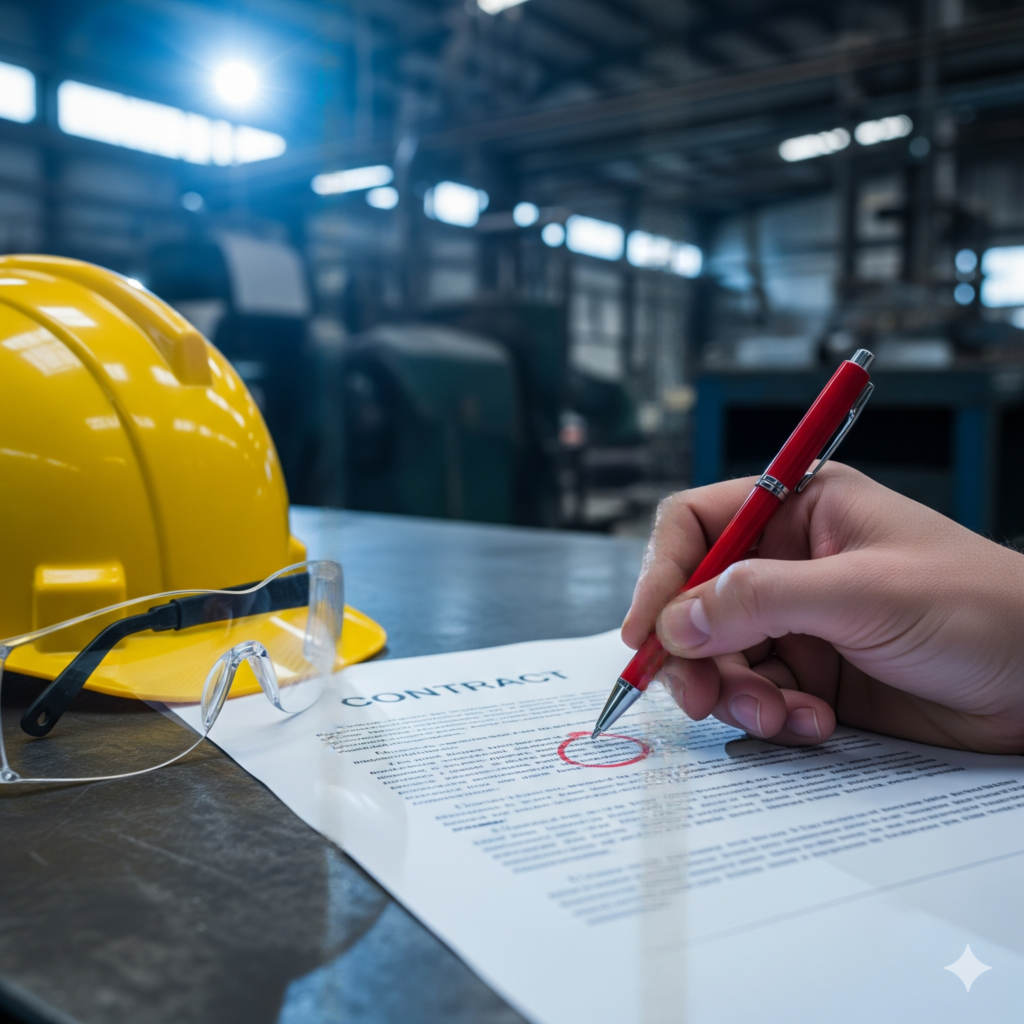
Protect Your Operations, Revenue, and Reputation with the Right Contracts
Industrial businesses operate in high-value, high-risk environments. Yet many manufacturers, suppliers, EPC contractors, and industrial service providers rely on outdated, unclear, or poorly drafted contracts—often without realizing the exposure they create.
A single contractual mistake can lead to production delays, payment disputes, legal claims, or regulatory penalties. Understanding these mistakes—and knowing how to avoid them—can save your business from significant losses.
The Cost of Poorly Drafted Industrial Contracts
In industrial operations, contracts govern:
- Supply and procurement
- Project execution
- Equipment installation and maintenance
- Vendor and subcontractor relationships
- Compliance and safety obligations
When contracts fail, the consequences are costly:
❌ Delayed payments
❌ Scope creep and disputes
❌ Liability for accidents or defects
❌ Project overruns and termination conflicts
Common Contract Mistakes Industrial Businesses Make
1. Using Generic or Copied Contract Templates
Standard templates don’t reflect industrial-specific risks such as machinery breakdowns, force majeure, shutdowns, or supply chain delays.
How to Avoid It:
Use contracts tailored to your industry, project scope, and operational realities.
2. Unclear Scope of Work and Deliverables
Vague descriptions lead to disputes over what is included—and what isn’t.
How to Avoid It:
Define detailed scopes, milestones, specifications, timelines, and acceptance criteria.
3. Weak Payment and Pricing Clauses
Missing payment schedules, escalation clauses, or penalty terms result in cash-flow issues.
How to Avoid It:
Include clear payment milestones, price adjustment mechanisms, late payment interest, and retention terms.
4. Ignoring Liability and Indemnity Risks
Many businesses unknowingly accept unlimited liability or unclear indemnity obligations.
How to Avoid It:
Clearly cap liabilities, define indemnities, and allocate risk fairly between parties.
5. Inadequate Termination and Exit Clauses
Poor termination clauses trap businesses in unviable contracts or lead to expensive legal battles.
How to Avoid It:
Define termination for convenience, default, force majeure, and associated exit costs.
6. Overlooking Force Majeure and Delay Provisions
Industrial projects are vulnerable to supply disruptions, strikes, regulatory changes, and natural events.
How to Avoid It:
Draft strong force majeure and delay clauses with notice requirements and relief mechanisms.
7. Missing Compliance and Safety Obligations
Failure to address statutory, environmental, and safety compliance can lead to penalties or shutdowns.
How to Avoid It:
Explicitly include compliance, audit rights, safety standards, and regulatory responsibilities.
8. No Clear Dispute Resolution Mechanism
Unclear dispute clauses increase legal costs and prolong conflicts.
How to Avoid It:
Specify governing law, jurisdiction, arbitration or mediation processes, and timelines.
Why Industrial Businesses Need Professionally Drafted Contracts
Industrial contracts are not just legal documents—they are risk management tools.
Professionally drafted contracts help you:
✔ Reduce operational and legal risks
✔ Protect cash flow and project timelines
✔ Strengthen supplier and customer relationships
✔ Avoid litigation and regulatory penalties
✔ Support scalable and compliant growth
How ClaimChase Helps Industrial Businesses Avoid Costly Contract Mistakes
At ClaimChase, we understand the commercial and operational realities of industrial businesses. Our contract services are designed to prevent disputes before they arise.
Our Contract Support Includes:
- Drafting and reviewing industrial contracts
- Risk assessment and clause strengthening
- Vendor, supplier & EPC agreements
- Contract restructuring and negotiation support
- Dispute-ready documentation
Secure Your Contracts. Secure Your Business.
Don’t wait for a dispute, shutdown, or non-payment to discover contract flaws.
📞 Get expert contract support today
📲 Call +91 9373267717